


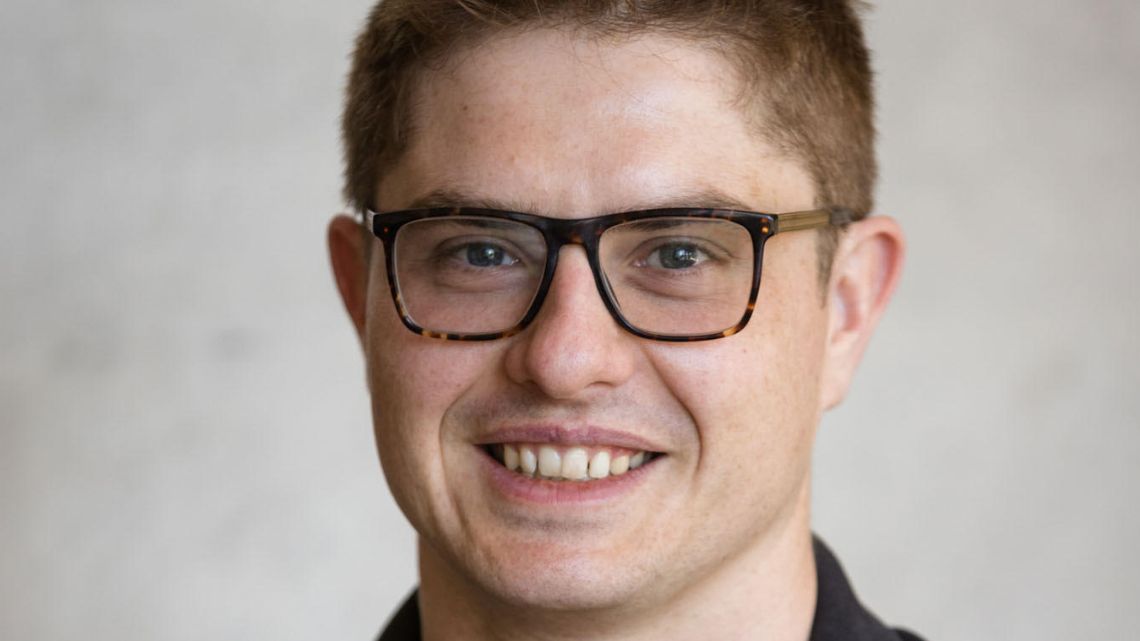
Alexander Bell: Director and Distiller at Milton Distillery and By Artisans
Last Updated on November 25, 2025 by Maythe Monoche
TRL: Can you briefly introduce yourself and your role in the rum industry?
I’m Alexander Bell, Founder and Director of Milton Distillery and By Artisans, two Brisbane-based distilleries in Queensland, Australia. My mission is to help put a spotlight on Australia’s rum scene by revitalising our rum-making heritage using a first-principles approach to distillation. I love understanding the fundamental science behind our craft and using that knowledge to interpret and reimagine my favourite international rum styles.
TRL: What was the biggest challenge you faced in launching your rum brand, and how did you overcome it?
The challenges never seem to stop. There have been several that felt catastrophic, both professionally and personally. COVID-19 was certainly difficult, but it led to one of our greatest innovations: the prototype of a miniaturised continuous distillation column I designed and built. That know-how positioned us well when demand rebounded. The most devastating challenge, however, was the 2022 Brisbane floods. We lost all of our aged stock, packaging materials, and our distillery itself. We had been preparing to release our first two-year aged rum, but every barrel was contaminated by floodwater. It was heartbreaking, as the spirit was among the best I’ve made. It was a Jamaican-style rum, co-fermented with yeast and bacteria, distilled in a dual-retort pot still I built myself. We eventually relocated, rebuilt, and restructured, though frequent moves and market shifts have limited our aged stock production. Rising living costs have also made consumers more price-conscious, which has put downward pressure on craft spirit sales. However, through each set back, there has always been opportunities to create something new and exciting, and this is what keeps us driving.
TRL: How do you see the rum market evolving in the next 5-10 years, and what trends do you think will shape the future of the industry?
I do see high-quality rum becoming more mainstream. With more Australian rum distilleries coming online producing some world-class spirit, there is such a great opportunity to share our (all distilleries) stories and showcase what we do best. As a second, but equally important point, sustainability will grow in importance. From what I have seen and heard from our customers, they are taking sustainability seriously and want to understand what we do as a distillery to address climate change.
I see high-quality rum becoming more mainstream globally. Australian distilleries are now producing world-class spirits, and there’s enormous opportunity to tell our collective story and share the diversity of styles being created here. Equally, sustainability will play an increasingly central role. Consumers are asking deeper questions about provenance, energy use, and environmental footprint. They expect brands to lead with transparency and innovation in addressing climate change. Helping this transition is the simple fact that rum is fun. With such a diverse category, there are nearly endless ways to reimagine classic
cocktails and bring them back to life.
TRL: Can you share a personal experience or moment that significantly influenced your brand’s direction?
Our recent rebrand to Milton Distillery was a defining moment. It gave us a chance to reconnect with the distillery’s 19th-century roots and celebrate the place we come from. The catalyst was wanting to create a brand that visually and emotionally reflected our history, our subtropical climate, and the weather patterns that define our terroir. Each spirit became an embodiment of Queensland’s elements. From the sun, to the humidity and the storms, all captured in liquid form.
TRL: How do you balance tradition with innovation in your approach to rum-making or marketing?
It’s always a dance between the two. My background in chemical engineering means I approach rum from a first-principles perspective – deconstructing traditional methods to understand why they work, then using modern science to refine or improve them. Sometimes the old ways win; often, innovation does.
On the marketing side, the challenge is translating that complexity into something emotionally engaging. Our story spans engineering, history, and culture, but attention spans are short. Finding ways to share our process in bite-sized, meaningful ways is something we’re still mastering!
TRL: What are some recent initiatives or products you’ve launched that have been particularly impactful?
One of our latest initiatives is nutrient recovery through yeast reuse. We recently commissioned a filter press that allows us to separate and repurpose yeast from our wash. By denaturing and reusing it as nutrient for future ferments, we close the loop and reduce waste. This has been an important sustainability milestone for us.
However, our first innovation remains the most transformative: an accelerated maturation process for our cane spirits. It mimics the complexity of barrel-aged rum in a fraction of the time, without angel’s share losses or storage costs. It was controversial at first (and to some extent remains controversial), but it’s one of the main reasons Milton Distillery survived over the years and continues to thrive. It is a proof point that innovation doesn’t necessarily mean compromising tradition, it means finding smarter ways to honour it.
TRL: How do you educate consumers about your rum, and what’s the most important lesson they should take away?
Education starts with storytelling. In Australia, rum still carries a mixed reputation, but when people hear its rich history and how deeply it’s tied to our own, they start to see it differently. Once that connection is made, they’re open to exploring the diversity that rum has to offer. The key message I want people to take away is simple: there’s a rum for everyone. The category is vast, nuanced, and endlessly fascinating. You just need to find the one that
speaks to you.
TRL: How do you manage quality and consistency as your brand grows and enters new markets?
Scaling up from 600L to 5000L batches has been both challenging and rewarding. Maintaining our signature ester profile required fine-tuning our fermentation parameters. We’re constantly experimenting and changing key inputs to better understand our processes. On the distillation side, the transition was smoother thanks to the way I designed our column system. It was built for scalability, so the same core principles apply across different throughputs. Interestingly, larger batch sizes have improved consistency, and I believe there’s an asymptote: beyond a certain scale, the profile stabilises naturally. As we enter new markets, it’s fascinating to see how preferences vary. In Queensland, spiced and dark spirits dominate, while other states lean toward lighter styles. I believe these differences are shaped largely by local cocktail culture and the ways people enjoy their spirits.
TRL: Can you share a collaboration or partnership that helped elevate your brand to new levels?
Collaboration is central to who we are. One of our most meaningful partnerships has been with Defence Force Associations across Australia. Creating commemorative spirits for them has deepened our sense of purpose and community connection.
We also work closely with a local social enterprise that assists with our labelling and packaging. Supporting inclusive employment and giving back through our growth is a responsibility we take seriously. These collaborations have helped us reach new customers who’ve discovered rum through our work and continue to support our spirits. More importantly, they allow us to express our authenticity and share our impact in meaningful ways. Building a brand identity rooted in purpose and shared values is what I’m most proud of.
TRL: What is your long-term vision for your rum brand, and how do you see your role in the evolution of the rum industry?
My long-term vision is for Milton Distillery to become a respected and reputable rum brand on the global stage, one recognised not just for its spirit quality, but for its integrity and sustainability. I want us to lead the conversation around modern, energy- and resource-efficient rum production and demonstrate that craftsmanship and environmental responsibility can coexist.
TRL: What’s one piece of educational advice you would give rum lovers to better understand the spirit?
Rum lovers already appreciate the incredible diversity of styles around the world, but if there’s one piece of advice I’d offer, it’s this: innovation and quality can coexist. The best rums don’t abandon tradition, they evolve from it.
TRL: How can people learn more about you? Website? Social media page?
Feel free to peruse our website and Instagram. If anyone would like to reach out and ask questions, please feel free to contact me directly.
- alexander@miltonrumdistillery.com
- www.miltondistillery.com
- @miltondistillery